
The Bedroom
Where you sleep is one of the biggest layout decisions in a tiny home. The main choice is ground-floor versus loft — which comes down to floor space, headroom, and how easily you want to get to bed now and in years to come. Choose a layout below.
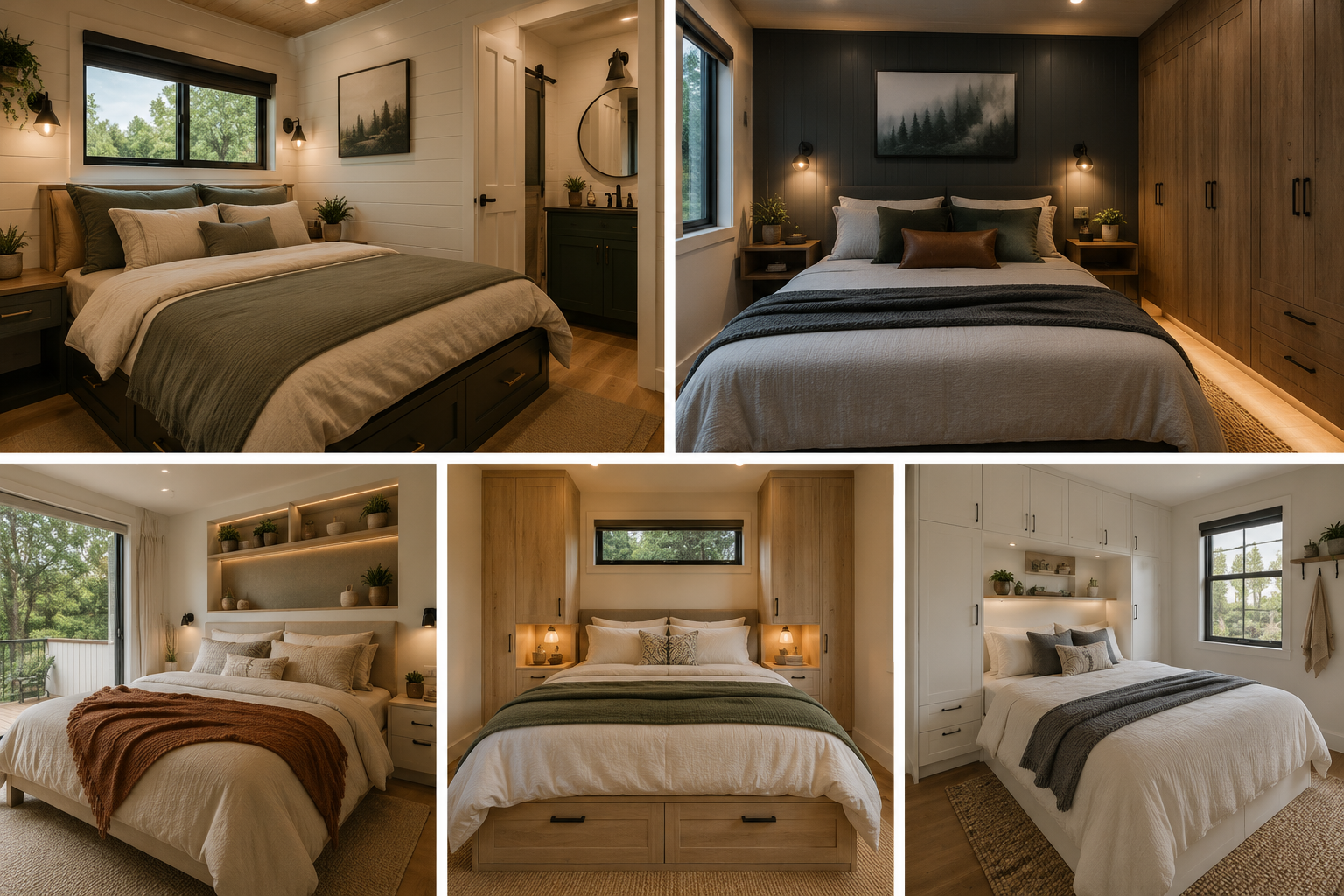
The current trend
For years the sleeping loft was the signature of a tiny home. The clear shift now is toward ground-floor bedrooms. As the buyers broaden beyond young minimalists to downsizers, retirees, couples and families, more people want a real bedroom they can walk into, with no ladder at night and full standing height. The loft is increasingly becoming a reverse loft: kept for storage, a study or a guest space rather than the main bed. Lofts are not disappearing, their role is just changing, and the winning 2026 layouts are the ones that still feel comfortable on a tired day, in bad weather, or after a minor injury.
Ground-floor bedroom (adults)
No stairs or ladder — the most age-friendly, future-proof choice.
View →Ground-floor bedroom (kids)
Safe and close to parents, with no loft fall risk.
View →Loft bedroom (adults)
Frees the floor below — but mind headroom and the nightly climb.
View →Loft bedroom (kids)
Fun and space-saving — with safety rails and headroom to plan.
View →Ground-floor vs loft, in detail
Why ground-floor is winning. No climbing means it is safer at night and far easier for older adults, anyone with mobility issues, or recovery from injury. You can stand up fully, making the bed is easy, and the room can have proper walls and a door for real privacy. Temperature is steadier too, since lofts trap rising heat. The trade-off is floor space: the bedroom competes with the kitchen, living and bathroom on the main level, often needing a slightly longer or wider home.
Where loft still shines. A loft frees the entire floor below for living and kitchen space, which can be the right call for younger owners, weekenders, or the smallest homes. Lofts feel cosy and tucked-away, and can make the whole home feel more open when left visible to the ceiling. The costs are the nightly climb, limited headroom, heat that rises, and less privacy and storage.
Smart middle paths. A ground-floor Murphy bed or lift bed gives a real downstairs sleep without permanently sacrificing the floor by day. Storage stairs (rather than a ladder) make a loft far more livable. And a reverse-loft plan, bedroom down, storage or office up, gives many homes the best of both.