
Ground-Floor Bedroom (Kids)
For children, a ground-floor bed trades floor space for safety and closeness — no loft fall risk, no ladder, and easy night-time access for parents.
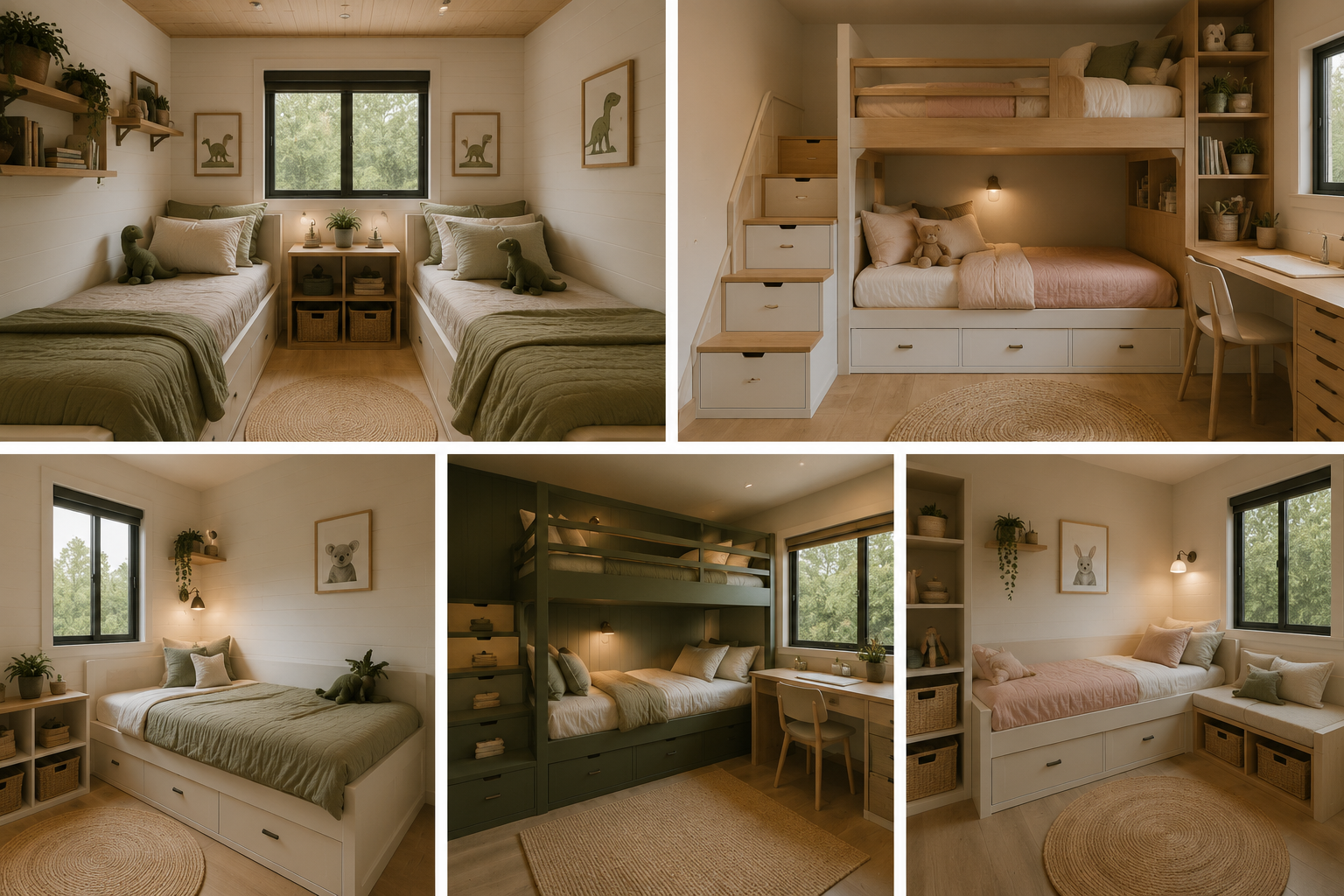
What to weigh up
Safety first
A ground-floor bed removes the biggest loft risk for children — a fall from a height or down a ladder. Especially important for younger kids and toddlers.
Advantages
- No fall-from-loft risk
- No ladder for little legs
- Safe to get up alone at night
- Peace of mind for parents
Trade-offs
- Uses floor space the home needs elsewhere
Close to parents
On a single level, children are within easy reach overnight — quicker to settle, comfort or check on than a child up in a loft.
Advantages
- Easy night-time access
- Reassuring for young children
- Simple bedtime routine
- Hear them easily
Trade-offs
- Less separation/privacy as they grow
Bunk & built-in options
Kids need less head height than adults, so ground-floor bunks or built-in beds with storage under stack two children into a small footprint.
Advantages
- Bunks fit two kids in one space
- Storage drawers under the bed
- Built-ins use the space efficiently
- Grows with the child
Trade-offs
- Top bunk still needs a guard rail
- Built-ins are harder to reconfigure
Flexibility as they grow
A ground-floor kids’ room can convert to a study nook, second living space or guest area later — useful as children grow up or leave.
Advantages
- Repurposes as needs change
- Doubles as daytime play space
- Convertible to office/guest
Trade-offs
- Permanent floor-space commitment
- May need rework to convert