
Loft Bedroom (Kids)
Kids often love a loft, and their smaller size suits the low headroom — but safety rails, secure access and the child's age are what make it work. Best for confident school-age children, not toddlers.
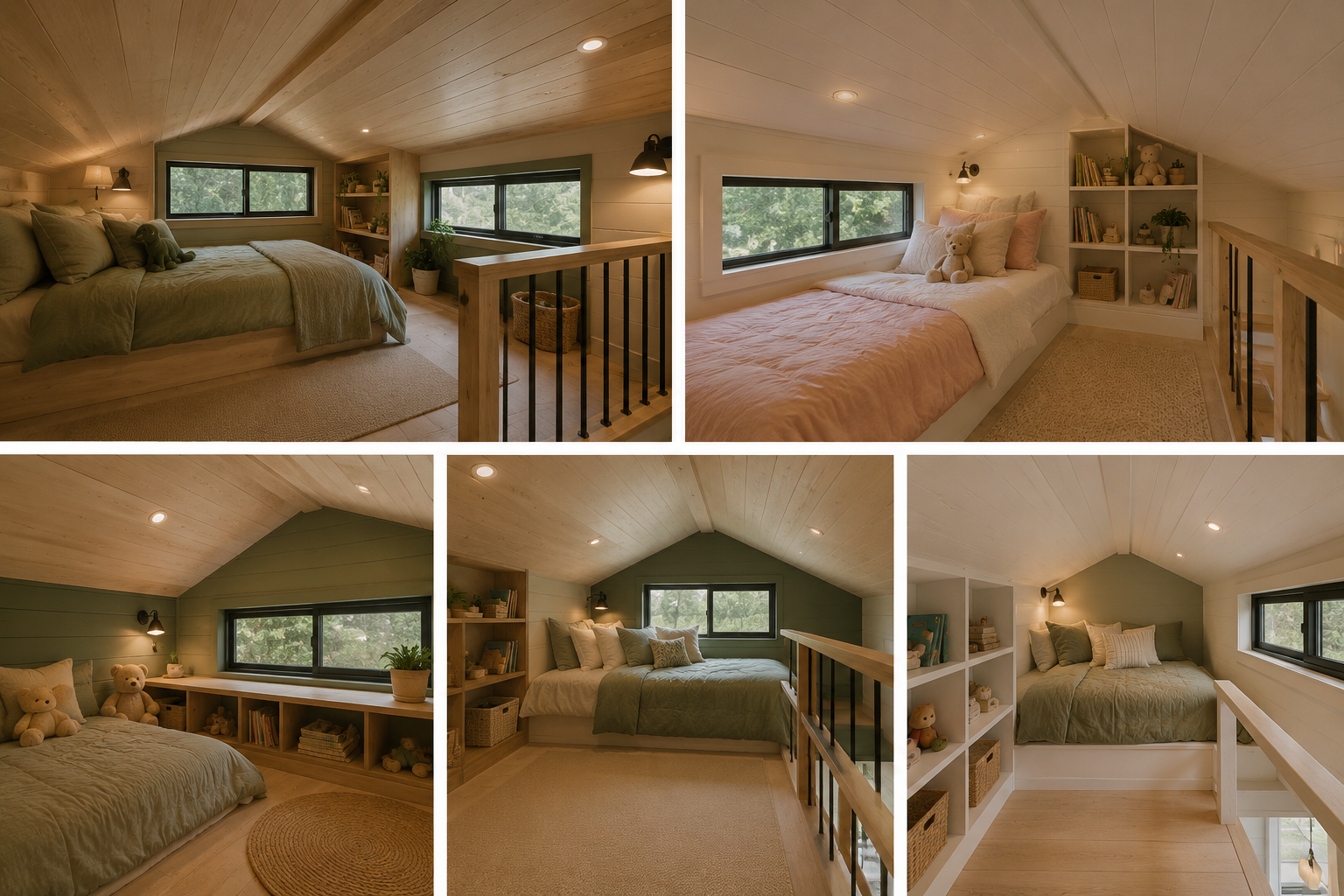
What to weigh up
Fun and space-saving
Kids often love a loft — it feels like a cubby or treehouse — and putting their bed up high frees the floor below for play and living. Children also need less headroom than adults, so a loft suits them well.
Advantages
- Kids enjoy the cosy, den-like space
- Frees floor space below for play
- Low headroom matters less for children
- Fits two with a bunk-style loft
Trade-offs
- They grow — headroom shrinks over time
- Toys and books still need storage
Safety rails (essential)
A child’s loft must have a solid guard rail or wall along any open edge, with gaps too narrow to slip or climb through. This is the single most important loft-for-kids feature.
Advantages
- Rails prevent falls
- Peace of mind overnight
- A solid half-wall is even safer
Trade-offs
- Rails must meet safe spacing
- Adds a little weight and cost
- Not for toddlers regardless of rails
Safe access
How a child gets up matters. A proper ladder fixed firmly, or better still space-saving stairs with a rail, is far safer than a loose or steep ladder.
Advantages
- Fixed ladder is secure
- Stairs with a handrail are safest
- Stairs can hide toy storage
Trade-offs
- Loose/steep ladders are risky for kids
- Stairs use floor space
- Younger kids may need supervision
Age matters
A loft suits school-age children who can climb confidently — not toddlers or very young children, who are safer in a low ground-floor bed until they’re ready.
Advantages
- Great for confident older kids
- Grows into a teen retreat
- Encourages independence
Trade-offs
- Not safe for toddlers/very young
- Night-time access harder for little ones
- Reassess as they grow
Heat & air up high
Like any loft, a child’s loft is the warmest part of the home and needs ventilation — an openable window or skylight and a fan keep it comfortable and safe to sleep in.
Advantages
- Warm in cooler weather
- Skylight adds light and air
- A fan keeps air moving
Trade-offs
- Can overheat in summer
- Needs good ventilation
- Watch stuffiness overnight