
Loft Bedroom (Adults)
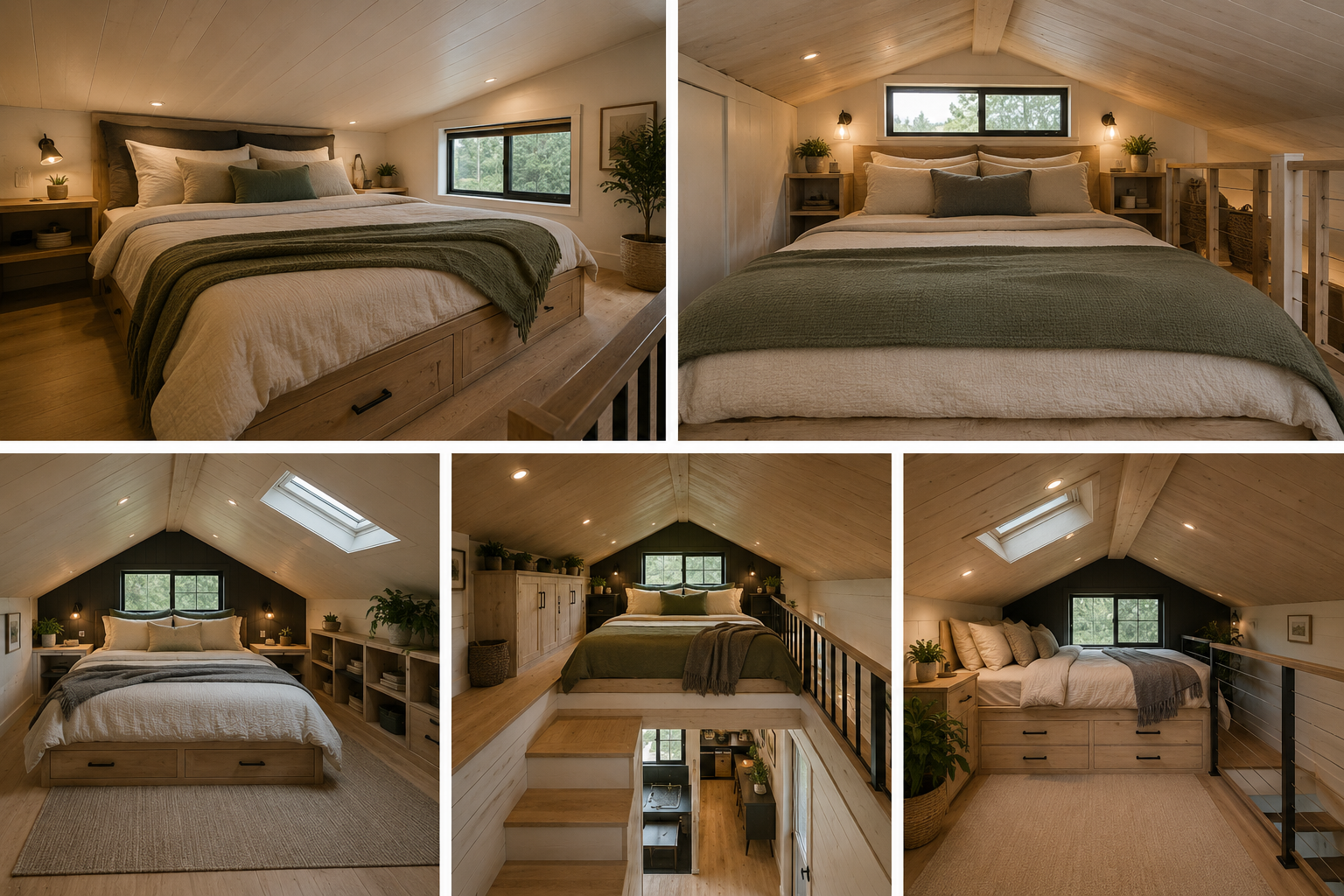
A loft frees up the floor below for living space — the classic tiny-home move. The trade-offs are headroom under the roof, a climb every night, and heat up high. Plan the pitch and the access carefully.
What to weigh up
Frees the floor below
The big win: putting the bed up in the roof space leaves the whole floor below for living, kitchen and bathroom. It’s how many tiny homes fit a full life into a small footprint.
Advantages
- Maximises living space below
- Bed is out of sight by day
- Lets a short home live larger
- Cosy sleeping nook
Trade-offs
- Everything else competes for the floor you freed
- Loft adds weight up high
Headroom & roof pitch (plan this carefully)
A loft sits under the roof, so headroom is limited. The roof pitch decides whether you can sit up in bed, kneel, or only crawl in. Measure it before you commit.
Advantages
- A steeper pitch gives more sitting height
- Skylight adds light and a sense of space
- Can feel like a private retreat
Trade-offs
- Often can’t stand up — only sit or kneel
- Low pitch means crawling in
- Can feel claustrophobic
- Hard to change bed sheets
The nightly climb
You reach a loft by ladder or stairs. A ladder is compact but a climb every night (and in the dark); space-saving stairs are easier and safer but eat floor space and storage.
Advantages
- Ladder is cheap and compact
- Stairs are safer and can hide storage
- Stairs feel more like a home than a ladder
Trade-offs
- Climbing every night and if you wake
- Risky half-asleep or in the dark
- Ladders are hard with anything in your hands
- Stairs use floor space
Ageing & long-term suitability
A loft works well while you’re fit and agile, but the climb gets harder with age, injury or illness. Worth an honest think about how long this home needs to suit you.
Advantages
- Fine for younger, mobile adults
- Great for a few years or a holiday home
Trade-offs
- Harder as you age
- A problem after injury or surgery
- Not ideal for a forever home
- Narrows resale appeal
Heat & ventilation up high
Warm air rises, so a loft is the hottest part of the home. An openable window, skylight or roof vent and a fan make a real difference to sleeping comfort.
Advantages
- Warm in winter
- Openable skylight = light, air and stargazing
- A fan evens out the temperature
Trade-offs
- Can be too hot in summer
- Needs good ventilation
- Condensation if poorly vented