
The Bathroom
Everything that goes into a tiny home bathroom. Choose a topic below — more are being added over time.
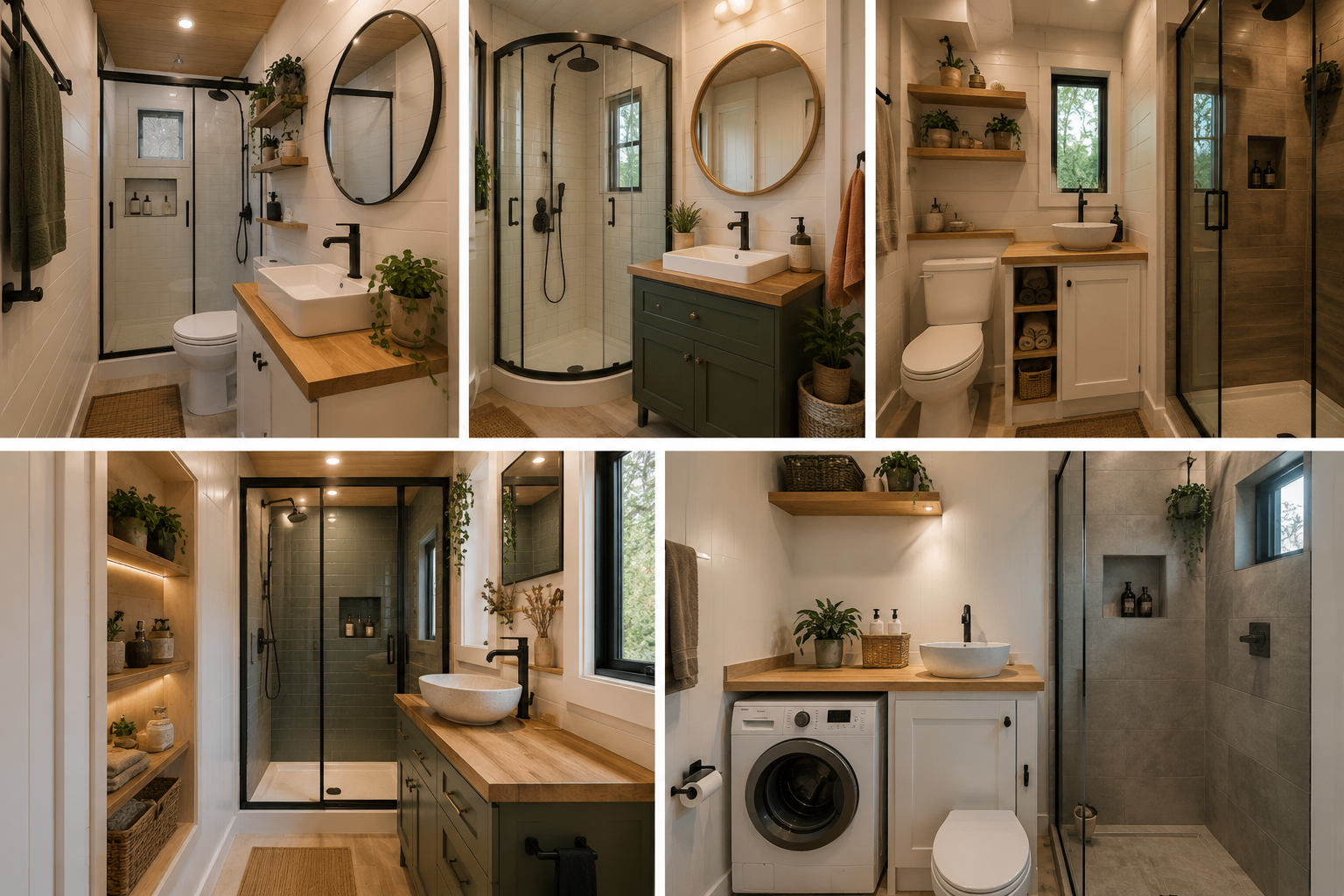
The current trend
Tiny bathrooms are moving toward warm, spa-like sanctuaries rather than cold, all-white boxes. Popular right now: open wet-room layouts where the whole room is waterproofed around a central drain; waterless toilets that free the layout from plumbing runs; wall-hung and corner fixtures that open up floor space; natural light from a skylight or high window to make the room feel bigger; and warmer finishes, timber, earthy tones, soft curved mirrors and mixed metal tapware, with smart touches like humidity-sensing exhaust fans and digital shower controls. The throughline is doing more with less: every fixture earns its place.
Toilets
Composting, incinerating, flush and more — with pricing and suppliers.
View →Shower
Corner showers, wet rooms, and water-saving options.
View →Bath
Compact soaking tubs and whether a bath suits a tiny home.
View →Basin & vanity
Wall-hung and corner basins that save floor space.
View →Flooring & heated floors
Waterproof, slip-resistant floors and underfloor heating.
View →Ceiling & roofing
Moisture-resistant linings and watertight roof penetrations.
View →Exhaust & ventilation
Fans and airflow to prevent mould in a wet space.
View →Lighting
Damp-rated fittings and efficient LED options.
View →Electrical
Safe, compliant wiring and power points in a wet area.
View →Waterproofing
Membranes, drainage and wet-room sealing.
View →Storage & finishing touches
Cabinets, shelving, towel rails and clever small-space storage.
View →Paint
Moisture- and mould-resistant paint for walls and ceiling.
View →Doors
Space-saving sliding, pocket and bifold doors.
View →Skylight & roof vents
Natural light and ventilation through the roof.
View →Septic & waste
Septic systems and greywater for flushing setups.
View →Smart space-saving design
Keep it proportionate. A common rule of thumb is that the bathroom should take up no more than about a quarter of the home's floor space. Many tiny bathrooms land around 1.5 by 2.4 metres, though they can be smaller.
Go wet-room. Waterproofing the whole room and using a central floor drain reclaims the space a shower enclosure would take, and makes a small room feel open. A folding glass screen or simple curtain keeps the toilet zone dry.
Choose waterless where you can. A composting or other waterless toilet removes plumbing constraints, so the toilet can go where it suits you, including in a corner, freeing the rest of the room for a wider shower or storage.
Wall-hung and corner fixtures. Mounting the toilet and basin off the wall, or tucking a curved basin into a corner, opens up floor area and makes cleaning easier.
Borrow light. A skylight or a high, narrow window adds light and ventilation without sacrificing wall space or privacy, and natural light is the single best way to make a small bathroom feel larger.
Build storage upward. Recessed mirrored cabinets, floating shelves, and hooks carve out storage without eating floor space.
Ventilate hard. Small, well-sealed bathrooms trap moisture, so a good exhaust fan (ideally humidity-sensing) is essential to prevent mould, especially if there is no opening window.