
Tiny House Solar & Batteries
Solar is one of the biggest reasons tiny homes can have such low running costs, and for off-grid living it is essential. A good system is more than panels: it is panels, batteries, an inverter and a controller working together. Here is how the pieces fit, and how to size them.
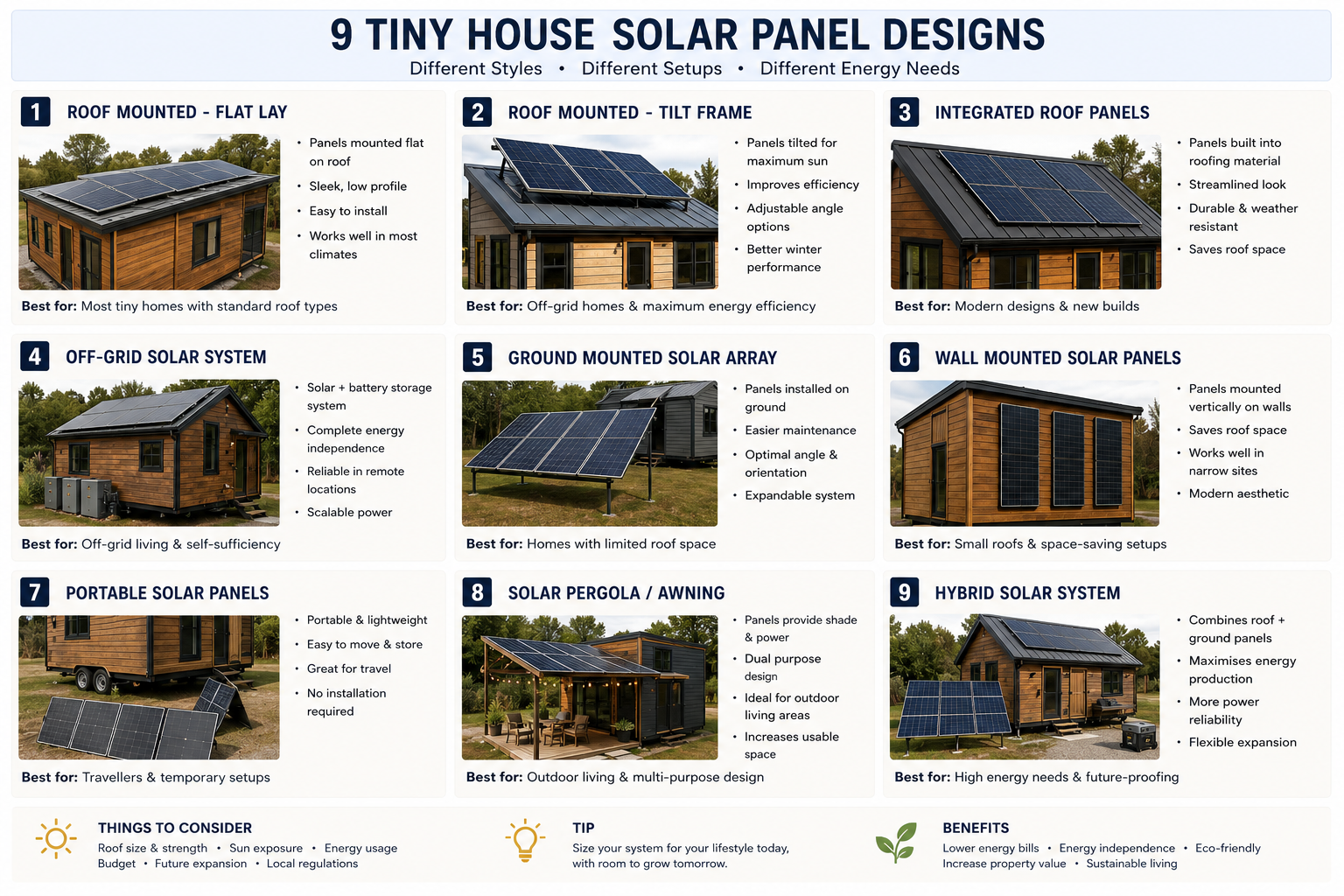
The parts of a system
Solar panels
Roof-mounted panels turn sunlight into power. For a tiny home, 3 to 6 panels is common. North-facing panels produce the most over the year in Australia; a west tilt shifts production to the afternoon. Keep them clear of shade from trees, the loft, or a tall neighbour.
Best for: The starting point of any off-grid or solar-assisted setup.
Batteries
Batteries store each day of solar so you have power at night and on cloudy days. Lithium (LiFePO4) is now the standard for tiny homes: long-lasting, compact and safe. Size the battery bank to how much you use after dark, not just your panel size.
Best for: Storing power for evenings and poor weather.
Inverter
The inverter converts stored battery power (DC) into normal household power (AC) for your appliances. Size it to your biggest simultaneous load, induction cooktops and air-conditioners draw a lot, so they drive the inverter size.
Best for: Running everyday 240V appliances off the battery.
Charge controller
Sits between the panels and the battery, managing the charge so the battery is filled efficiently and not damaged. An MPPT controller squeezes the most out of your panels, especially in variable light.
Best for: Protecting the battery and maximising charge.
Mains / grid backup
Many owners run solar and battery as the main supply but keep a plug-in mains connection as backup for long cloudy stretches. This hybrid approach gives near-zero bills most of the time with peace of mind.
Best for: Reliability without going fully off-grid.
Generator backup
For fully off-grid sites, a small generator covers extended bad weather or heavy-use periods. Used sparingly, it is a cheap insurance policy against running flat.
Best for: Remote sites with no mains available.
Sizing it sensibly
Start with your usage, not the panels. Add up what you run in a day, fridge, lights, devices, washing machine, heating or cooling, and size the battery and panels to cover it with a buffer for cloudy days.
A common tiny-home system produces in the order of 8 to 10 kWh a day, enough for lights, a fridge, charging, a washing machine and moderate heating or cooling. Heavy loads like air-conditioning and induction cooking push you toward a bigger system.
Roof space is limited, so plan panel layout early and keep it clear of shade. Orientation matters: design the roof slope and direction around the panels from the start.
Weight counts. Panels and especially batteries add weight for towing. Factor them into your weight budget, and mount the heavy battery bank low and over the axles where possible.