
Tiny House Wastewater & Sewage
How you deal with wastewater is one of the deciding factors in where you can put a tiny home and how independent it can be. The good news: tiny homes have excellent options, from waterless composting toilets to compact on-site treatment. Here is how they compare, plus where the technology is heading.
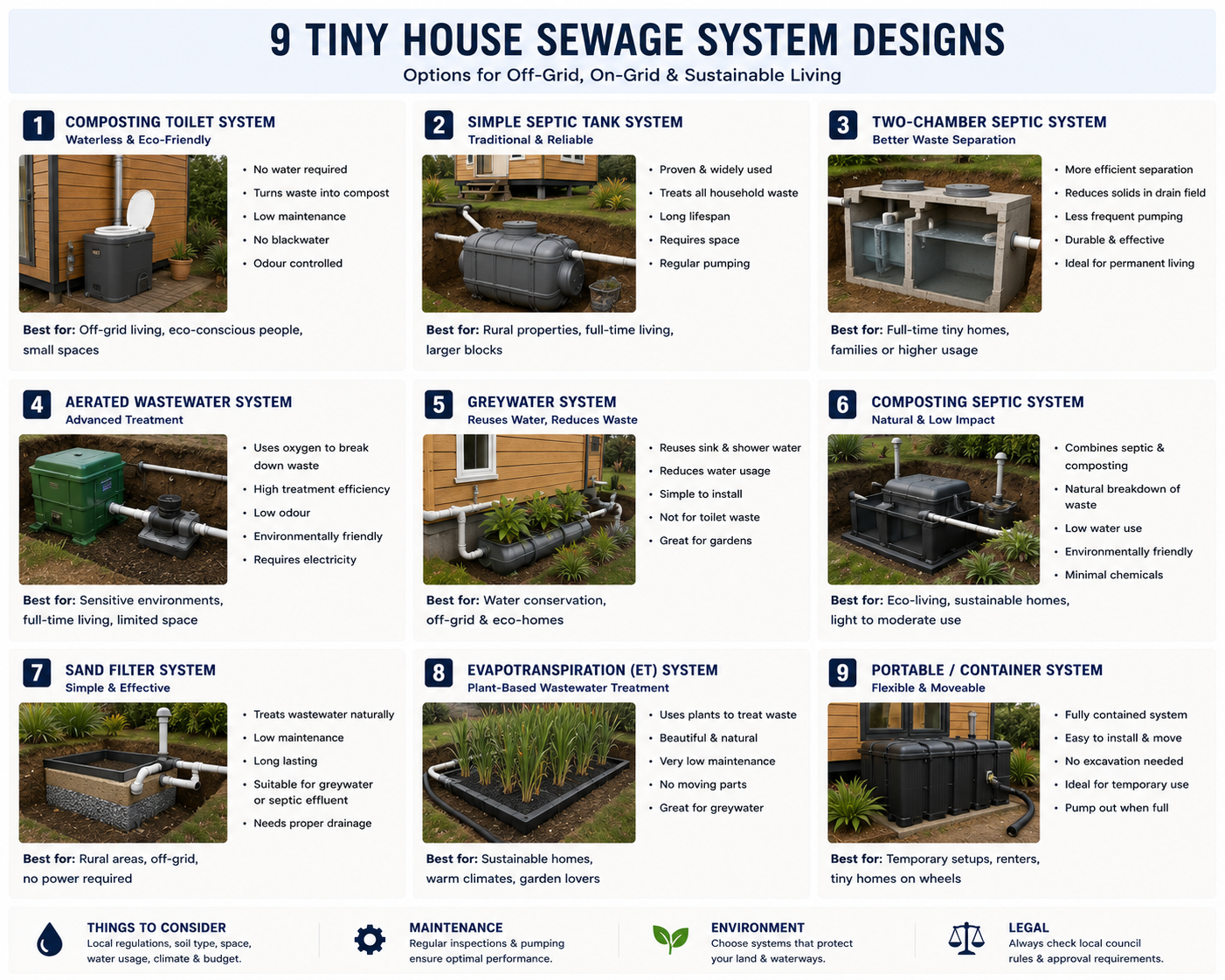
The current trend
The clear direction is decentralised, water-saving, off-grid waste. For movable homes, urine-diverting dry toilets with silent fans have become the cutting edge, no water, minimal power, and far less maintenance. For fixed homes, compact worm-based systems and mini treatment pods are replacing big traditional septic tanks, handling both black and grey water in a small footprint with little or no electricity. Across the board the move is toward managing waste safely on site without a municipal sewer connection, and keeping black and grey water separate so greywater can be reused.
Wastewater options
Composting toilet (urine-diverting)
The waterless favourite for off-grid and mobile homes. It separates liquids from solids, which prevents odour and lets solids break down into a safe, soil-like material. No water, no sewer connection, no black-water tank, and usually a small 12V fan to keep the bathroom fresh. Urine is diverted away and solids are emptied periodically. Self-contained models sit on the floor; split systems drop into an under-floor chamber for longer gaps between emptying.
Best for: Off-grid and movable homes wanting maximum freedom.
Incinerating toilet
Burns waste at high heat (using electricity or LPG) down to a small amount of sterile ash you empty occasionally. No water and no composting material to manage, and often classed outside wastewater-treatment rules, which can simplify approvals. The trade-off is a hefty power or gas draw per cycle and a high purchase price, so it suits sites with plenty of energy.
Best for: Stationary cabins with ample power and a bigger budget.
Worm-based treatment (vermifilter)
A compact biological system that uses a bed of worms and microbes to process both black and grey water, producing clean effluent for sub-surface garden irrigation. Designed for small dwellings, often needs no electricity, uses no harsh chemicals and is very low maintenance. Suits fixed homes rather than ones on the move.
Best for: Permanent sites wanting an eco-friendly, low-power system.
Mini aerated treatment (AWTS)
A small on-site treatment plant that pumps oxygen into the waste to speed up natural breakdown, producing water clean enough for sub-surface irrigation. Capable and compact, but it runs on mains power and needs scheduled servicing by an accredited technician.
Best for: Fixed homes needing full on-site treatment.
Poly septic pod
A lightweight, rotomoulded polyethylene septic tank, often 1,500 litres or smaller, that is durable, transportable and an affordable way to handle primary waste where there is room for a drainage field. A simple, passive option subject to soil and council approval.
Best for: Rural blocks wanting a low-cost passive system.
Greywater system & lift pumps
Greywater (from sinks, shower and washing machine, not the toilet) is the easy wastewater: filtered through a grease trap and gravel and reused on the garden. Because trailer-mounted homes make gravity drainage tricky, compact plug-and-play lift pumps quietly collect greywater and move it to a drainage field or higher sewer line.
Best for: Reusing water and draining homes that sit on a trailer.
Town sewer connection
Where available, the home plumbs straight into mains sewer like any house. The most hands-off option, but it ties you to a serviced site and, once connected, can have your home treated as a permanent structure for approval purposes.
Best for: Serviced, stationary sites.
What to consider
Black water vs grey water. Toilet waste (black) and sink/shower waste (grey) are best handled separately. Grey water is far easier to reuse on the garden; black water needs proper treatment or composting. Use biodegradable products if greywater goes onto your garden.
Mobile vs fixed. Waterless toilets (composting or incinerating) suit homes that move, since they need no plumbing connection. Worm systems, AWTS and septic pods suit fixed homes with land for a drainage field.
Certification. When choosing a composting or treatment system, look for one certified to the relevant Australian and New Zealand standard (AS/NZS 1546.2 for composting toilets), which many councils require.
Approvals. On-site systems usually need council and health approval, suitable soil, and setbacks from boundaries and waterways. A waterless composting toilet often needs minimal approval, which is a big part of its appeal.
Access and placement. Tanks and fields must sit where a service truck can reach them, downslope of water sources, and clear of where stormwater runs.