
Roof
Your roof shape affects loft headroom, towing height, water collection and looks. On a home with a 4.3 m height limit, every choice trades interior space against style and drainage.
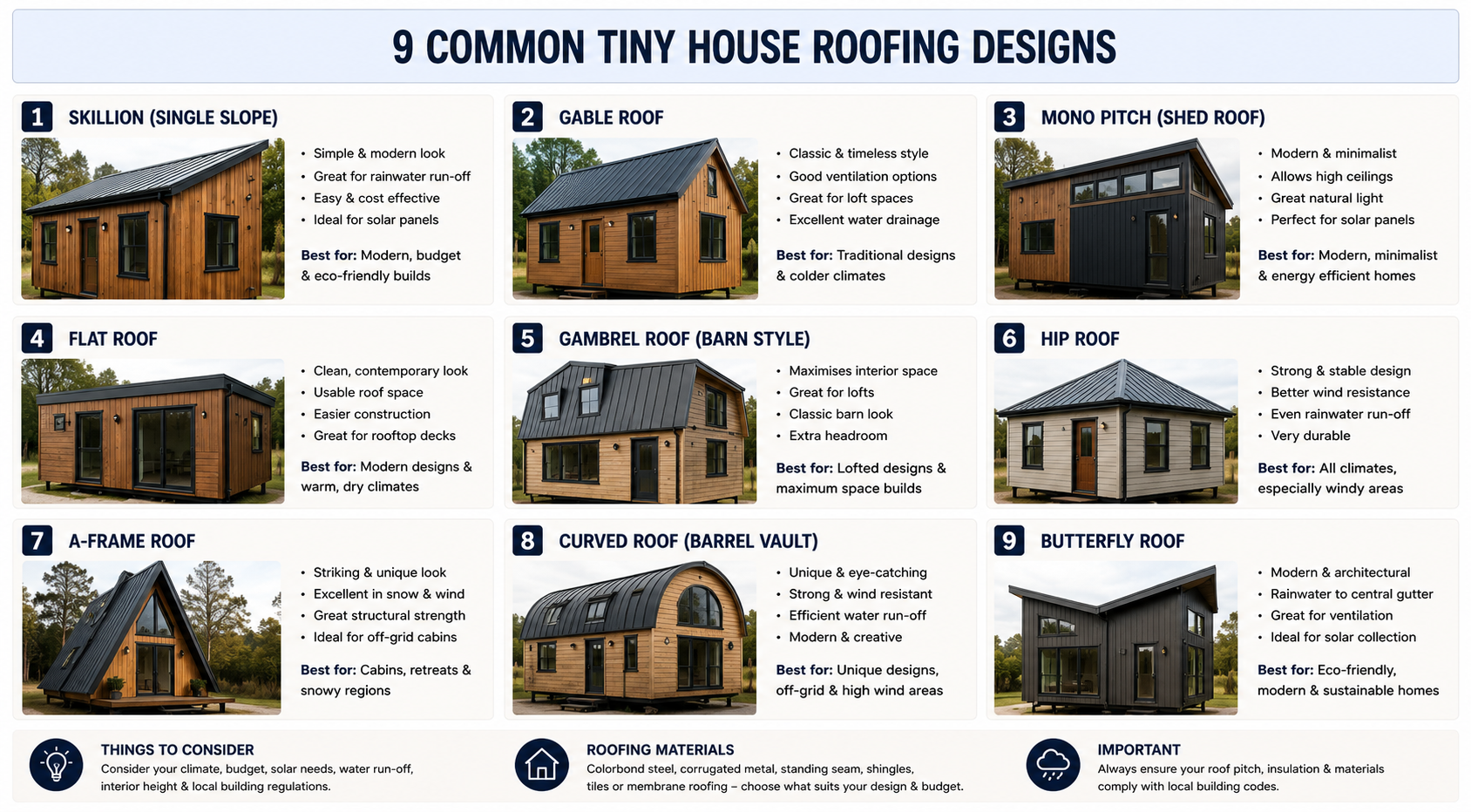
Roof types
Mono-pitch (skillion)
A single sloping plane. Simple, cheap, sheds water well, and makes the most of the height limit on one side - giving a tall wall for loft windows. The most popular modern tiny-house roof.
Best for: Modern look, loft headroom, easy water collection
Gable (pitched)
The classic two-sided peaked roof. Sheds rain and snow well and gives a traditional cottage look, but the peak eats into the 4.3 m height limit, reducing loft space.
Best for: Traditional style, good drainage, snow areas
Flat (low-slope)
Nearly flat with a slight fall for drainage. Maximises interior height and can host solar panels easily, but needs careful waterproofing and good falls to avoid pooling.
Best for: Maximum interior height, rooftop solar
Curved / barrel
A gently curved roof - striking and aerodynamic for towing, but more complex and costly to build and waterproof.
Best for: Design statement, aerodynamics
What to consider
Height limit: in Australia the overall towing height is capped at 4.3 m. A steep roof or tall pitch reduces the loft headroom you can fit beneath it.
Weight: the roof sits at the top of the build, so heavy materials raise the centre of gravity and affect towing. Lightweight steel (Colorbond) is the common choice.
Water collection: a single-slope roof makes rainwater harvesting simple - one gutter line feeding a tank. Worth planning early if you intend to go off-grid for water.