
Rangehood & Splashback
In a small, sealed tiny home, cooking moisture has nowhere to go — so good extraction really matters to avoid condensation and mould. Pricing is shown per country; regions marked "being researched" are coming soon.
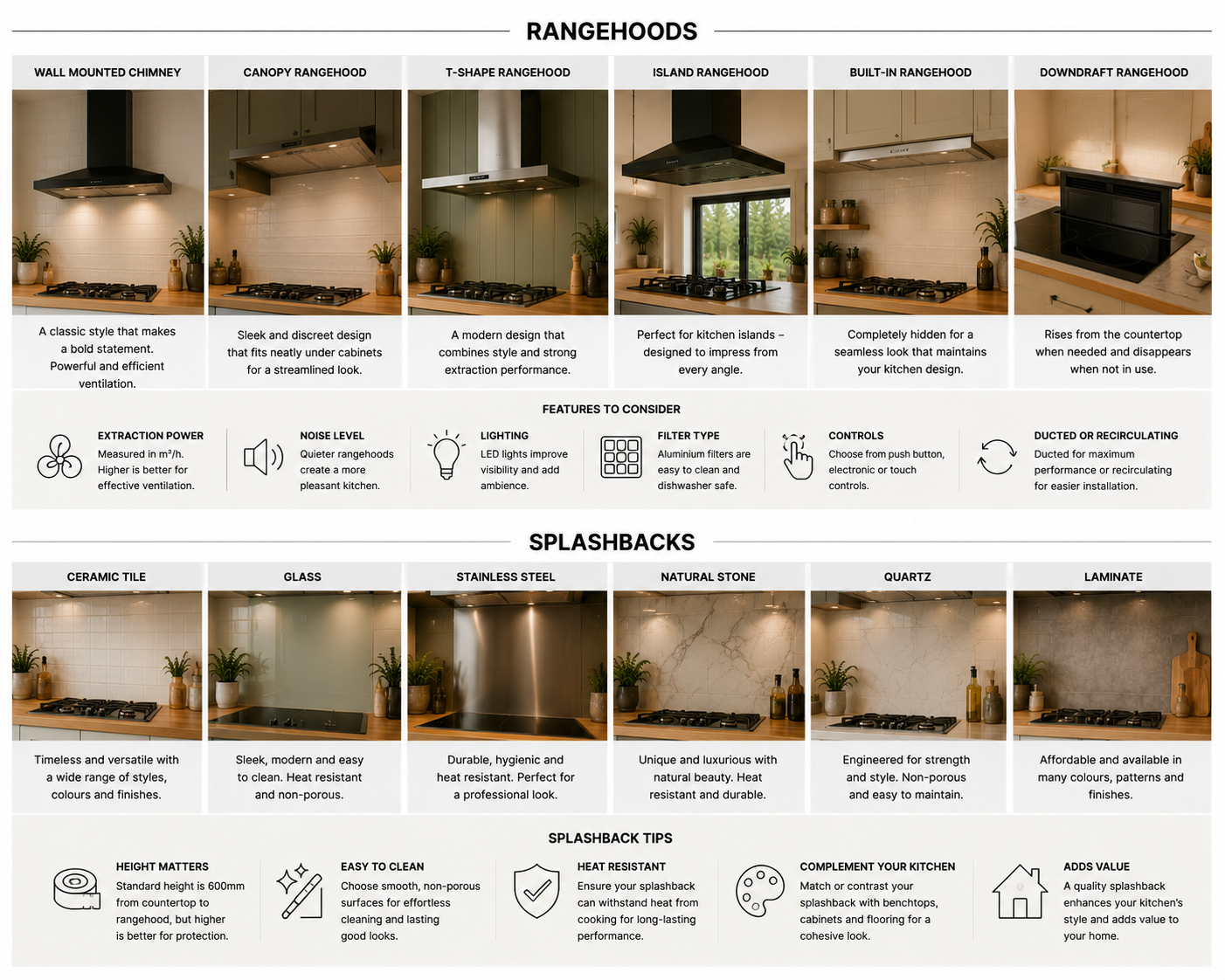
Rangehood & splashback options
Ducted Rangehood
Pushes cooking steam, grease and odour through ductwork to the outside. The most effective type — and required by code for a gas cooktop.
Advantages
- Best at removing moisture, grease and smells
- Required for gas cooktops (external ducting)
- Keeps a small space drier
- Less mould risk
Disadvantages
- Needs a duct path to outside
- More install work
- A penetration to seal on a THOW
Indicative pricing
Recirculating Rangehood
Pulls air through a charcoal filter and returns it to the room — no hole to the outside needed. Easier to fit, but less effective at removing moisture.
Advantages
- No external duct required
- Easiest to install
- Good where ducting is hard
- Cheapest setup
Disadvantages
- Does not remove moisture well
- Charcoal filters need replacing
- Not enough for a gas cooktop
Indicative pricing
Silent / Remote-Motor Rangehood
A premium ducted unit with the motor mounted away (e.g. in the roof), so the kitchen stays quiet — nice in an open-plan tiny home where everything is one room.
Advantages
- Very quiet (motor is remote)
- Powerful extraction
- Good for open-plan tiny spaces
Disadvantages
- Most expensive option
- Still needs ducting and install
- Overkill for light cooking
Indicative pricing
Splashback (tile / glass / acrylic / stainless)
The wall surface behind the cooktop and sink — protects against splashes and grease and wipes clean. Light materials suit a tiny home on wheels.
Advantages
- Protects the wall, easy to clean
- Acrylic & stainless are light (good on a THOW)
- Lots of looks
- Stainless handles heat behind a cooktop
Disadvantages
- Tile is heavier and grout needs cleaning
- Glass is heavy and needs templating
- Must suit heat behind the cooktop
Indicative pricing