
Off-Grid Kitchen
An off-grid kitchen is about matching what you cook and clean with the power and water you can make yourself. The winning combination for most tiny homes: gas cooking, an efficient 12V fridge, and rainwater in, greywater out. Pricing is shown per country; regions marked "being researched" are coming soon.
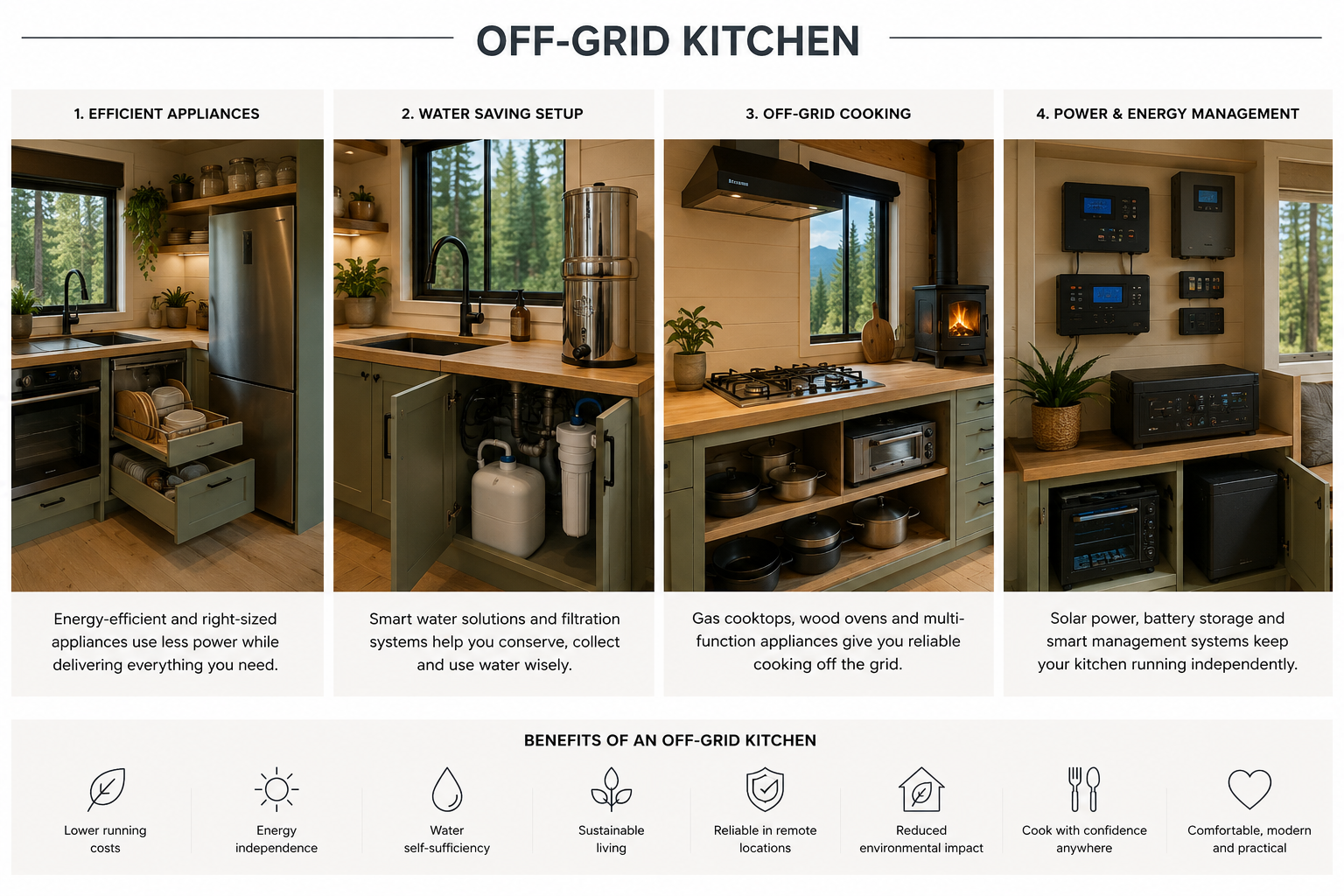
Off-grid kitchen systems
LPG Gas Cooking
Bottled LPG runs the cooktop (and often continuous-flow hot water) with zero electrical draw — which is why most off-grid tiny homes cook with gas. A dual regulator lets you swap between two bottles.
Advantages
- No electrical load — saves your battery
- Works day or night, any weather
- Standard 9kg/45kg bottles, easy to refill
- Instant heat
Disadvantages
- Licensed gas fitter to install
- Ventilation + CO alarm needed
- Storing/swapping bottles
Indicative pricing
Solar-Powered Appliances
Your fridge, lights and small appliances run off the solar + battery system. The trick is choosing efficient, low-draw items (a 12V fridge, LED lights) so the system stays affordable.
Advantages
- Runs the fridge and lights for free once installed
- Pairs with efficient 12V appliances
- Silent, no fuel
Disadvantages
- High-wattage items (kettle/toaster) strain small systems
- Sizing needs a pro
- Cloudy-day backup needed
Indicative pricing
Rainwater to the Sink
Rain off the roof goes to a tank, then a pump lifts it to the kitchen tap, through a filter. A UV filter disinfects it for drinking; many also drink well-maintained rainwater unfiltered.
Advantages
- Free water supply
- Roof catchment can cover most needs
- Filter/UV makes it drinking-safe
Disadvantages
- Tank, pump and filter to buy and maintain
- UV filter ~$2,000 + install
- Filter cartridges replaced 6–12 monthly
Indicative pricing
Greywater from the Sink
Used water from the kitchen sink is directed out through a filter and grease trap to a garden trench or treatment system, rather than to sewer.
Advantages
- Reuses water on the garden
- No sewer connection needed
- Simple diversion is cheap
Disadvantages
- Kitchen water has grease — needs a trap
- Full treatment systems are pricey
- Council approval often required
Indicative pricing
Compost Bin for Food Scraps
A small bench caddy or under-sink bin collects food scraps for composting outside — closing the loop and keeping smells and waste out of a tiny home.
Advantages
- Cuts food waste
- Feeds a garden
- Cheap and simple
- No bin runs
Disadvantages
- Needs an outdoor compost spot
- Empty regularly to avoid smell
- Caddy takes a little space
Indicative pricing