
Lighting & Power
Good kitchen lighting is layered: bright task light where you work, softer ambient light for the room. LED keeps the power draw tiny — important off-grid. Pricing is shown per country; regions marked "being researched" are coming soon.
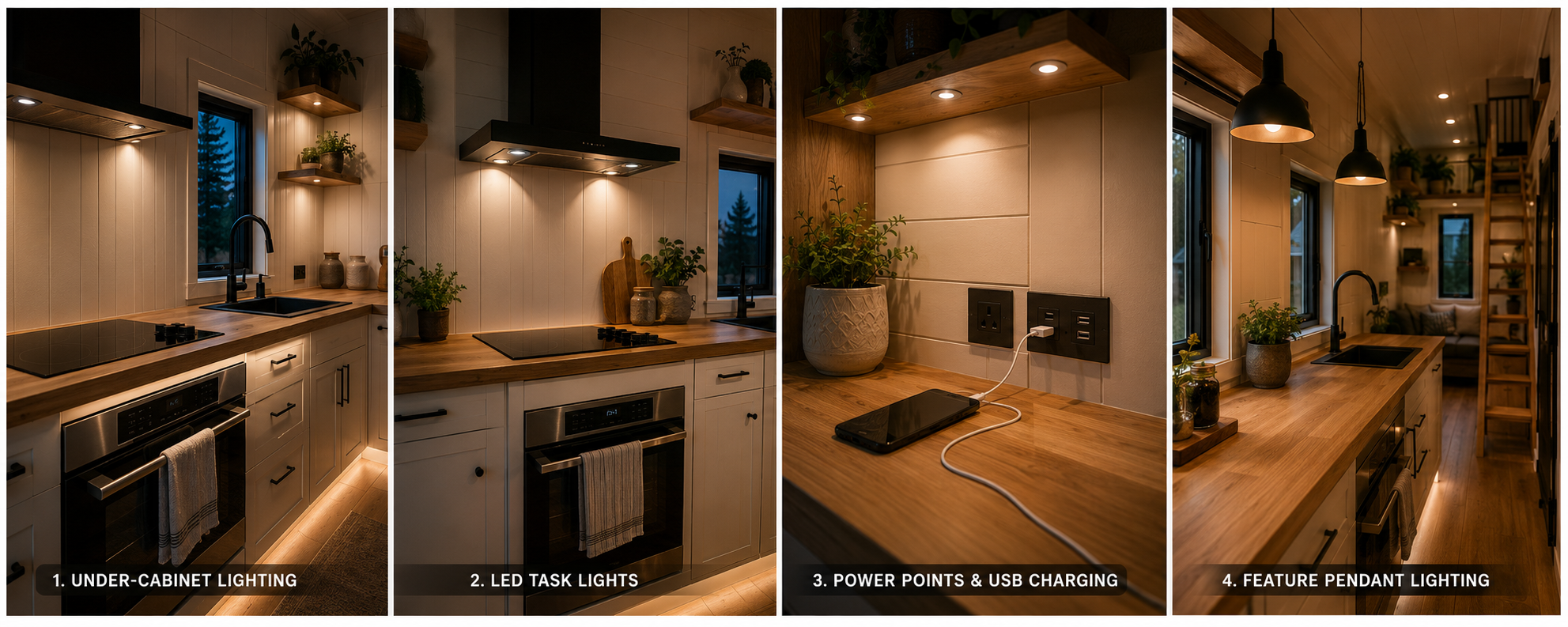
Lighting & power options
Under-Cabinet LED Strip
Peel-and-stick LED tape under the overhead cabinets, lighting the bench directly. The number-one task light for a small kitchen — cheap, low-draw and tidy.
Advantages
- Cheap and easy (peel-and-stick)
- Very low power draw
- Lights the bench where you work
- Hidden, no floor/bench space used
Disadvantages
- Needs a power supply/driver
- Cheaper strips can be uneven (COB is best)
- Not dimmable unless you add a dimmer
Indicative pricing
Pendant / Ceiling Lights (ambient)
Overhead pendants or downlights give general room light. Aim for ambient light around a third as bright as your task lighting, layered together.
Advantages
- Lights the whole space
- Pendants add style over a bench/bar
- Pairs with task lighting
Disadvantages
- Pendants can crowd a low ceiling
- Another fixed fitting to wire
- Glare if too bright alone
Indicative pricing
12V vs 240V (the off-grid choice)
12V LED runs straight off your battery — very efficient. But 12V fixtures can be lower quality and lose brightness over long runs, so some off-gridders prefer 240V via the inverter for more choice.
Advantages
- 12V: most efficient, no inverter losses
- 240V: huge fixture choice and quality
- LED keeps either option low-draw
Disadvantages
- 12V DC fixtures can be limited/lower quality
- 12V loses voltage over long cable runs
- 240V relies on the inverter being on
Indicative pricing
Power Points & USB / USB-C
Bench power for appliances, plus USB and USB-C points for phones and small devices. In a tiny kitchen, a couple of well-placed points beat many awkward ones.
Advantages
- USB/USB-C saves plug packs
- Combo socket + USB + light units exist
- Plan for appliance spots (kettle, toaster)
Disadvantages
- Must be installed by a licensed electrician
- Wet-area placement rules near the sink
- Limited wall space to fit them
Indicative pricing