
Tiny House Internal Walls & Linings
Internal linings set the entire mood of your tiny home, and because the space is small, every surface is on show. The right choice balances the look you want against weight, how well it copes with movement, and moisture resistance in wet areas.
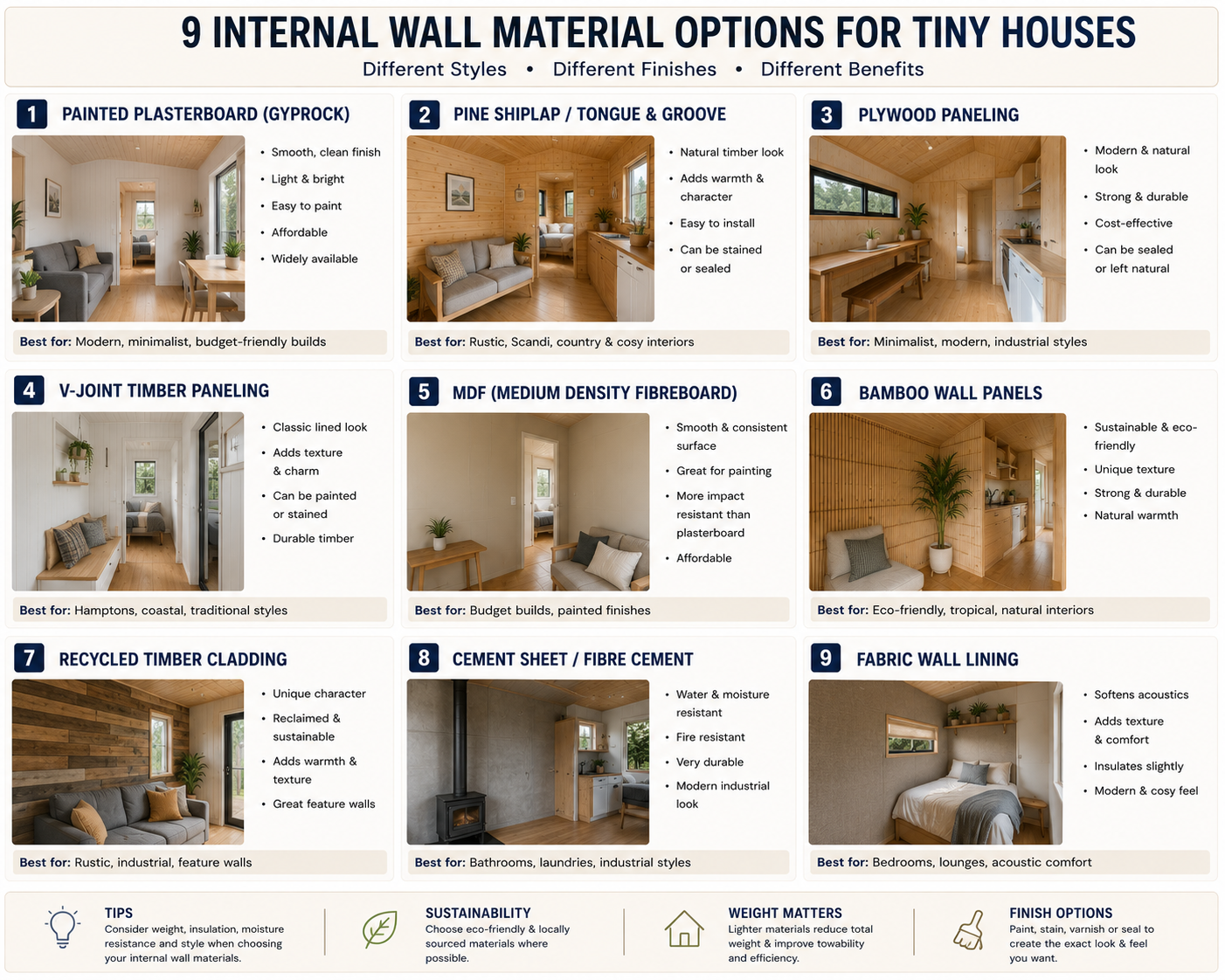
Lining materials
Timber-look ply / plywood lining
Sealed plywood panels give a warm, modern, natural finish and go up fast. Light on the trailer and forgiving of movement, which is why so many tiny homes use it. Choose the timber species or grade for the look you want.
Best for: A warm, contemporary feel with low weight.
Painted plasterboard (gyprock)
The standard house lining: smooth, paintable, and cheap. It gives a familiar "proper home" finish, but it is heavier and can crack with the flex and vibration of towing, so it needs careful fixing.
Best for: A conventional painted look on homes that move rarely.
VJ / tongue-and-groove panelling
Vertical-joint boards give a classic coastal or cottage character. Timber or sheet versions exist; the sheet versions keep weight down while still looking like traditional panelling.
Best for: Hamptons, coastal and cottage styles.
Feature timber walls
A single wall of natural timber boards as a highlight adds warmth and a focal point without cladding the whole interior in heavy material.
Best for: Adding character behind a bed or in the living area.
Tile / splashback areas
In the kitchen and bathroom, tiles or waterproof panels protect walls from moisture. Keep tiled areas modest to manage weight, and use flexible adhesive to cope with movement.
Best for: Wet zones and splashbacks.
Moisture-resistant lining (wet areas)
Bathrooms need linings designed to handle steam and splashes, such as water-resistant board or sealed panels behind tiles, to prevent mould and rot in a small, humid space.
Best for: Behind bathroom tiles and in shower surrounds.
What to consider
Weight: linings cover every wall, so the material adds up. Plywood and sheet panelling are much lighter than plasterboard or tile across the whole interior.
Movement: a home that gets towed flexes slightly. Panel products and ply handle this better than plasterboard, which can crack at joints without careful fixing.
Light and space: pale linings make a small interior feel larger and brighter; lots of dark timber can close it in. Many tiny homes use light walls with a single timber feature for balance.
Moisture: bathrooms and kitchens need water-resistant linings to prevent mould in a compact, humid space. Do not use standard lining behind a shower.