
Tiny House Framing
The frame is the skeleton of your tiny home: it carries the loads, holds everything together, and has to survive being towed down the highway. Your framing choice affects weight, strength, insulation, cost and how easy the build is, so it is one of the most important early decisions.
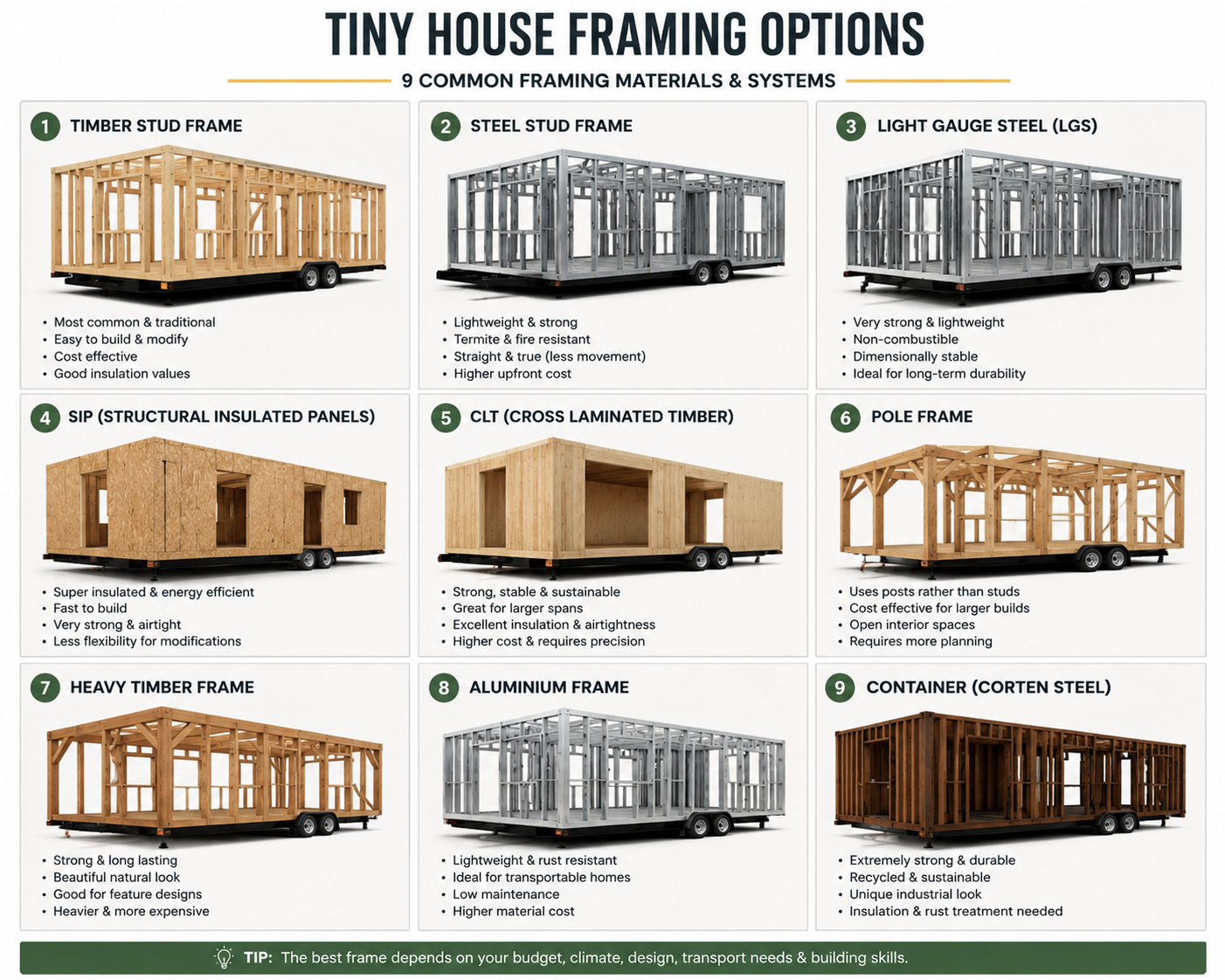
Framing options
Timber framing
The traditional choice: pine or hardwood studs, like a normal house but lighter-built. Easy to work with, well understood by any builder, good natural insulation, and simple to fix things to. Needs treating against moisture and pests.
Best for: Most builds, DIY-friendly projects, and a warm natural feel.
Steel framing
Light-gauge steel studs. Straight, strong, termite-proof and fire-resistant, and it will not warp or shrink. Conducts heat and cold though, so it needs careful insulation (a thermal break) to avoid cold spots and condensation.
Best for: Durability, bushfire areas, and consistency.
SIPs (structural insulated panels)
Pre-made panels with insulation sandwiched between two boards. They are structure and insulation in one, very airtight and quick to assemble, but cost more and need planning up front.
Best for: High insulation, fast assembly, extreme climates.
Aluminium framing
Lightweight and rust-proof, sometimes used to keep weight right down. Specialist and pricier, with the same thermal-bridging care as steel.
Best for: Weight-critical or coastal builds.
Hybrid framing
Mixing materials, for example a steel chassis and sub-floor with timber wall framing above. Puts each material where it works best: steel for the tough base, timber for easy walls.
Best for: Balancing strength, weight and buildability.
What to consider
Weight: the frame is heavy and permanent, so it eats into your towing budget early. Lighter framing leaves more allowance for cladding, water and belongings.
Thermal bridging: steel and aluminium conduct heat, creating cold spots and condensation unless a thermal break and good insulation are designed in. Timber avoids this naturally.
Strength in transit: unlike a fixed house, a tiny home is shaken and flexed every time it moves. The frame must handle these road forces, not just standing loads.
Buildability: timber is the most DIY-friendly and any builder can work with it. Steel and SIPs often need specialist skills or pre-fabrication.