
Tiny House Flooring
Flooring takes the wear in a tiny home, and because the whole place is one connected space, it sets the tone everywhere. The best choices are light, durable, water-tolerant and able to cope with the slight flexing that comes with a home that can move.
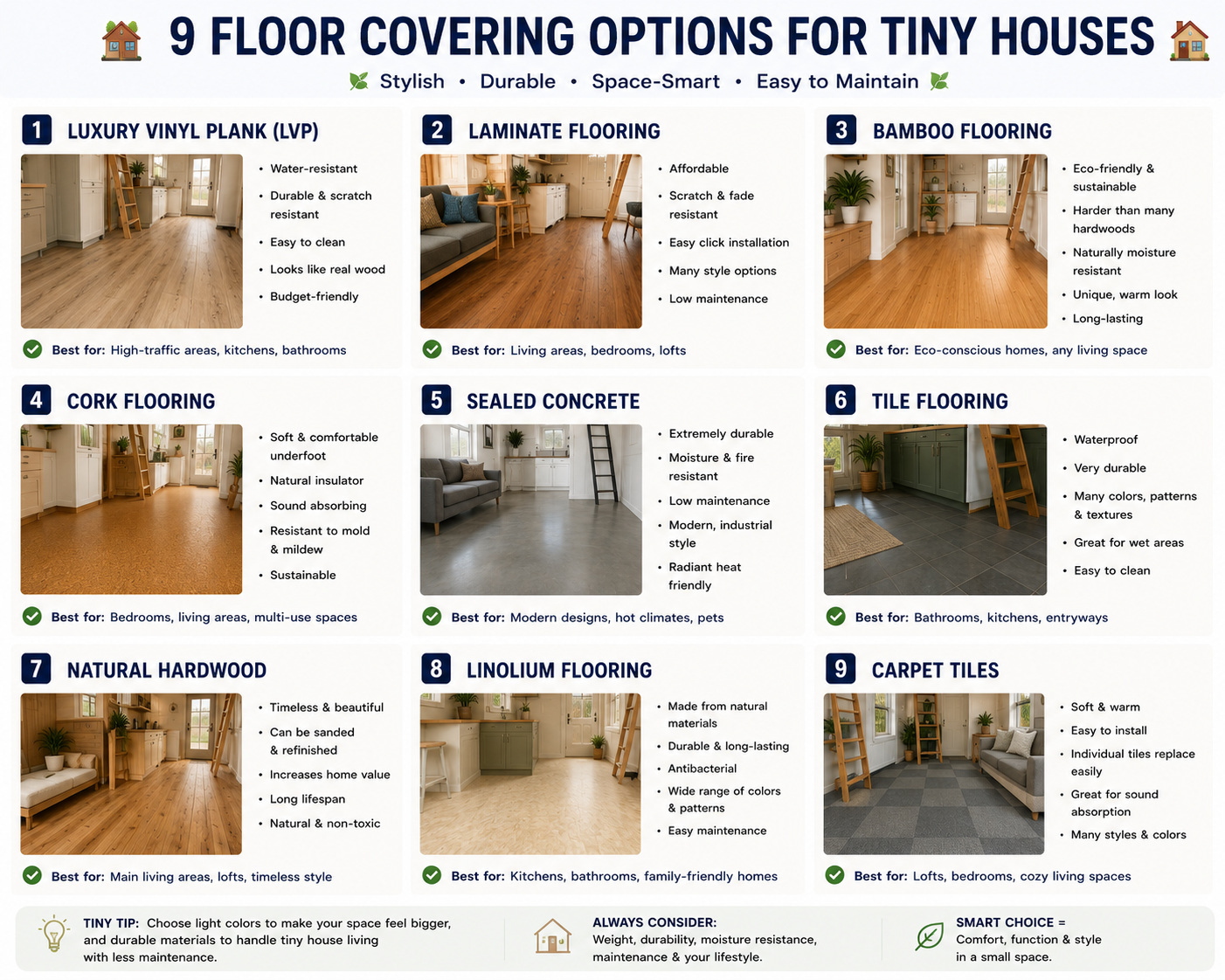
Flooring options
Vinyl plank / luxury vinyl
Click-together or glue-down planks that look like timber. Waterproof, warm underfoot, light and forgiving of the flex and movement of a home on wheels. A tiny-house favourite.
Best for: Most tiny homes, especially wet areas and high-traffic spots.
Laminate
A printed timber-look layer over a board core. Affordable and tough, but less water-tolerant than vinyl, so seal edges well in damp areas.
Best for: Budget builds in living and sleeping areas.
Engineered timber
Real timber veneer over a stable ply base. More stable than solid wood (important with temperature swings in a small space), with a genuine timber feel.
Best for: A natural look where budget allows.
Cork
Soft, warm and naturally insulating, with some give underfoot. Comfortable to stand on and quiet, though it needs sealing and can dent.
Best for: Comfort underfoot and extra insulation.
Tiles
Hard-wearing and fully waterproof, ideal for bathrooms. Heavy though, and can crack if the floor flexes, so they need a solid substrate and flexible adhesive.
Best for: Bathroom and wet areas, in a fixed or well-built floor.
Polished ply / plywood
Sealed structural plywood as the finished floor. Very light and budget-friendly with a clean, modern look, though softer and less water-resistant.
Best for: Weight-conscious, modern budget builds.
What to consider
Movement: a home on wheels flexes slightly in transit. Click-together vinyl and laminate handle this better than rigid tiles, which can crack without a solid, flexible setup.
Weight: floors cover the whole footprint, so the material adds up. Vinyl, laminate and ply are light; tile and stone are heavy.
Water: bathrooms and entryways need waterproof flooring. Vinyl and tile handle wet areas; timber and laminate need careful sealing.
One floor, or zones: running one flooring throughout makes a tiny home feel larger and seamless. Switching to tile just in the bathroom is a common, practical exception.