
Tiny House Cladding & Exterior Walls
Cladding is your tiny home’s skin and its first impression. It sets the style, defends against weather, and adds weight you have to tow. The right choice balances looks, durability, maintenance, fire rating and how much it adds to the load.
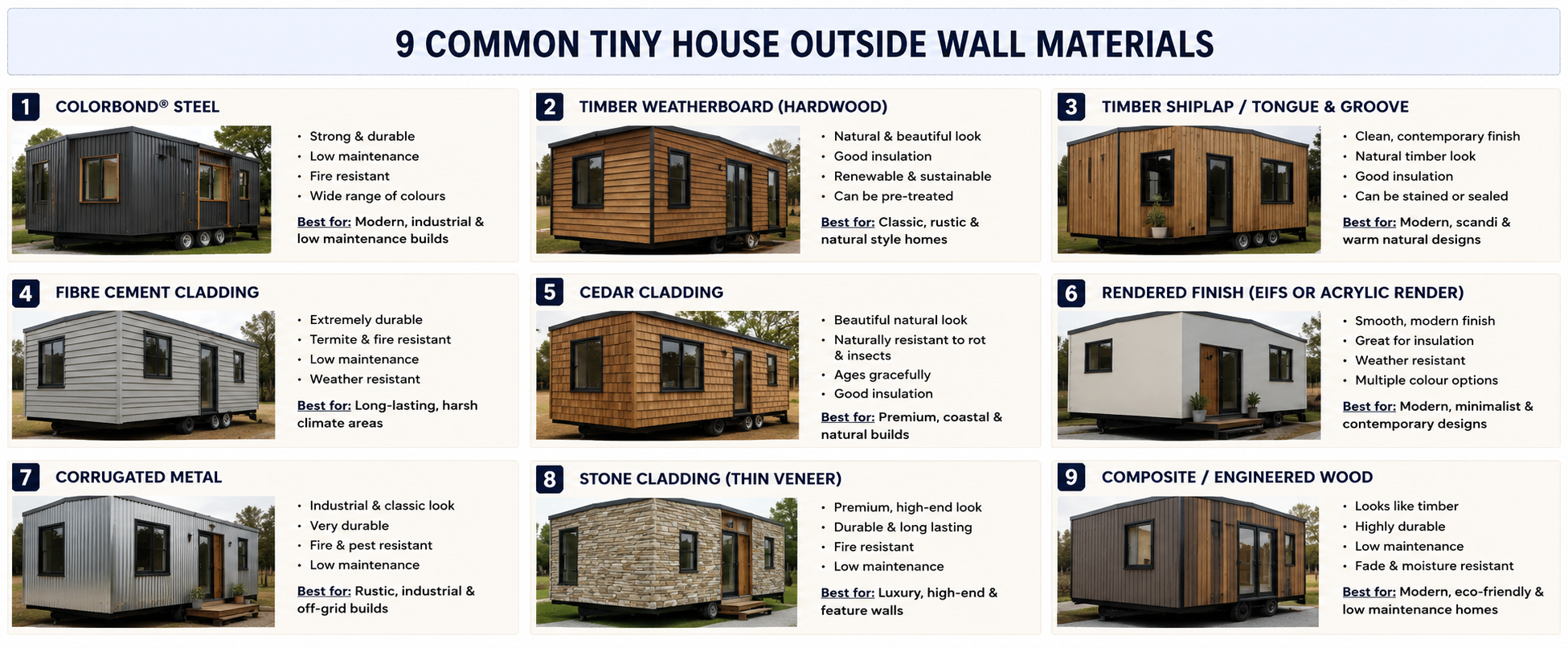
Cladding materials
Colorbond / steel cladding
Lightweight powder-coated steel sheeting. Durable, low-maintenance, fire-resistant and comes in many colours. A go-to for Australian tiny homes, especially in bushfire areas.
Best for: Low maintenance, modern looks, bushfire zones.
Timber weatherboard
Natural timber boards for a warm, classic look. Beautiful but needs sealing and periodic re-oiling or painting to handle the weather.
Best for: Cottage, coastal and natural styles where you will maintain it.
Plywood / sheet cladding
Large sheets (like spotted-gum or marine ply, or panel products) give a clean, contemporary finish quickly and are light on the trailer.
Best for: Modern, budget-aware builds wanting fast coverage.
Fibre cement
Cement-and-fibre boards (e.g. weatherboard or panel look). Tough, fire-resistant and stable, though heavier than steel or ply.
Best for: A painted weatherboard look with low upkeep.
Composite cladding
Engineered boards that mimic timber without the maintenance. Stable and long-lasting, at a higher upfront cost.
Best for: A timber look without the re-oiling.
Mixed cladding
Combining two materials, say steel with a timber feature wall, adds character and lets you put the tough material where weather hits hardest.
Best for: Adding visual interest and zoning durability.
What to consider
Weight: cladding covers a big area, so the material’s weight adds up fast. Lightweight steel or ply keeps you under your trailer’s towing limit more easily than heavy options.
Maintenance: natural timber looks beautiful but needs regular sealing. Steel, composite and fibre cement are far lower upkeep, worth weighing if the home is hard to access for ladders.
Fire rating: in bushfire-prone areas, non-combustible cladding like steel or fibre cement may be required. Check your BAL rating.
Weatherproofing: what sits behind the cladding (the wrap, battens and flashing) matters as much as the cladding itself for keeping the home dry, especially as it flexes during towing.